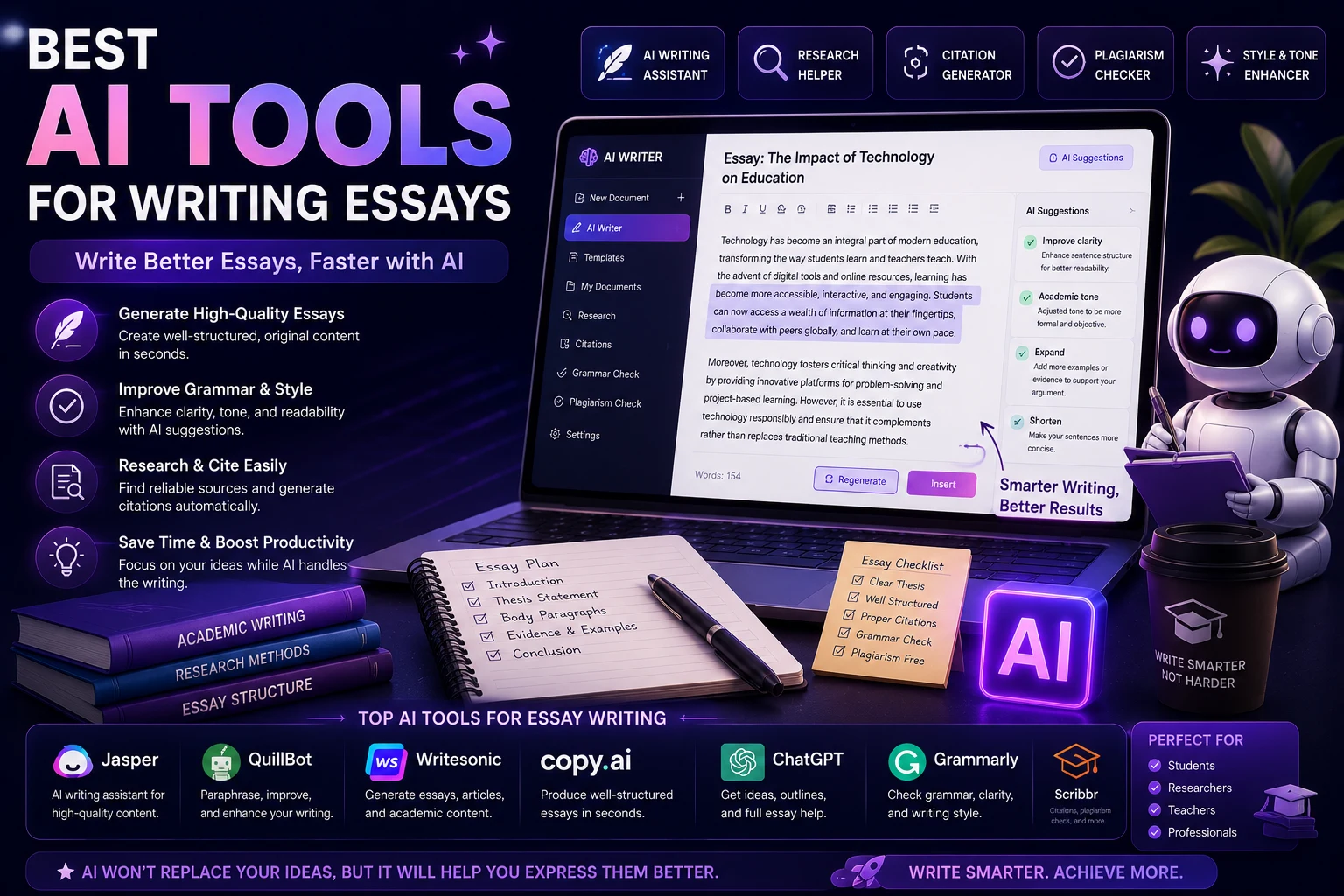

Writing a good essay can take hours. You need to understand the topic, research reliable information, develop an argument, create an outline, write clearly, organize your ideas, and carefully review the final draft.
AI writing tools can make many of these steps faster. Modern AI assistants can help students brainstorm ideas, create outlines, explain difficult topics, improve grammar, review arguments, summarize research, and refine drafts.
However, the best AI tool for essays is not necessarily the one that simply generates an entire essay. For academic work, it is often more useful to choose tools that help with research, organization, editing, citations, and feedback.
In this guide, we'll compare some of the best AI tools for writing essays in 2026 and explain what each tool is best suited for.
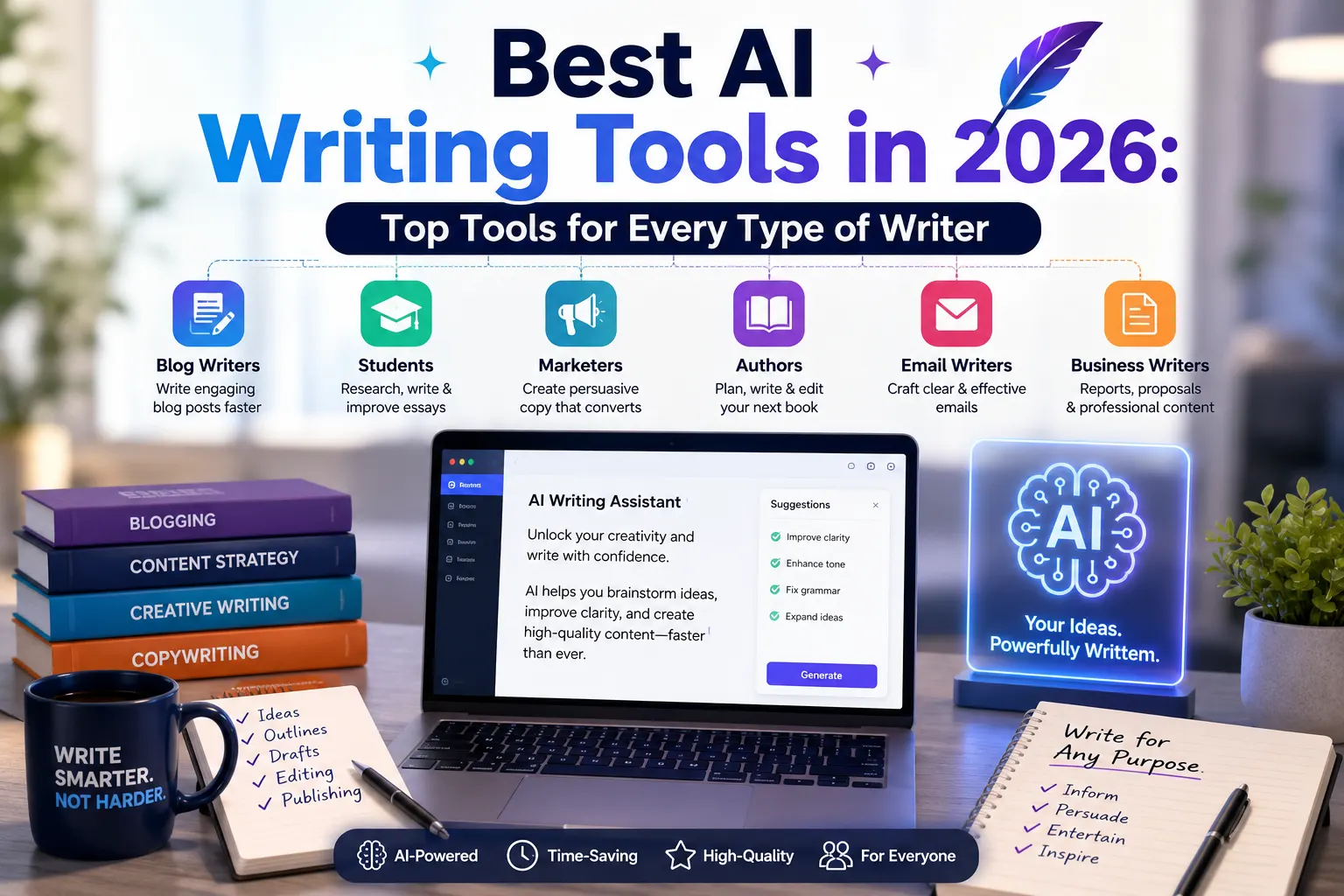
Best AI Tools for Writing Essays in 2026
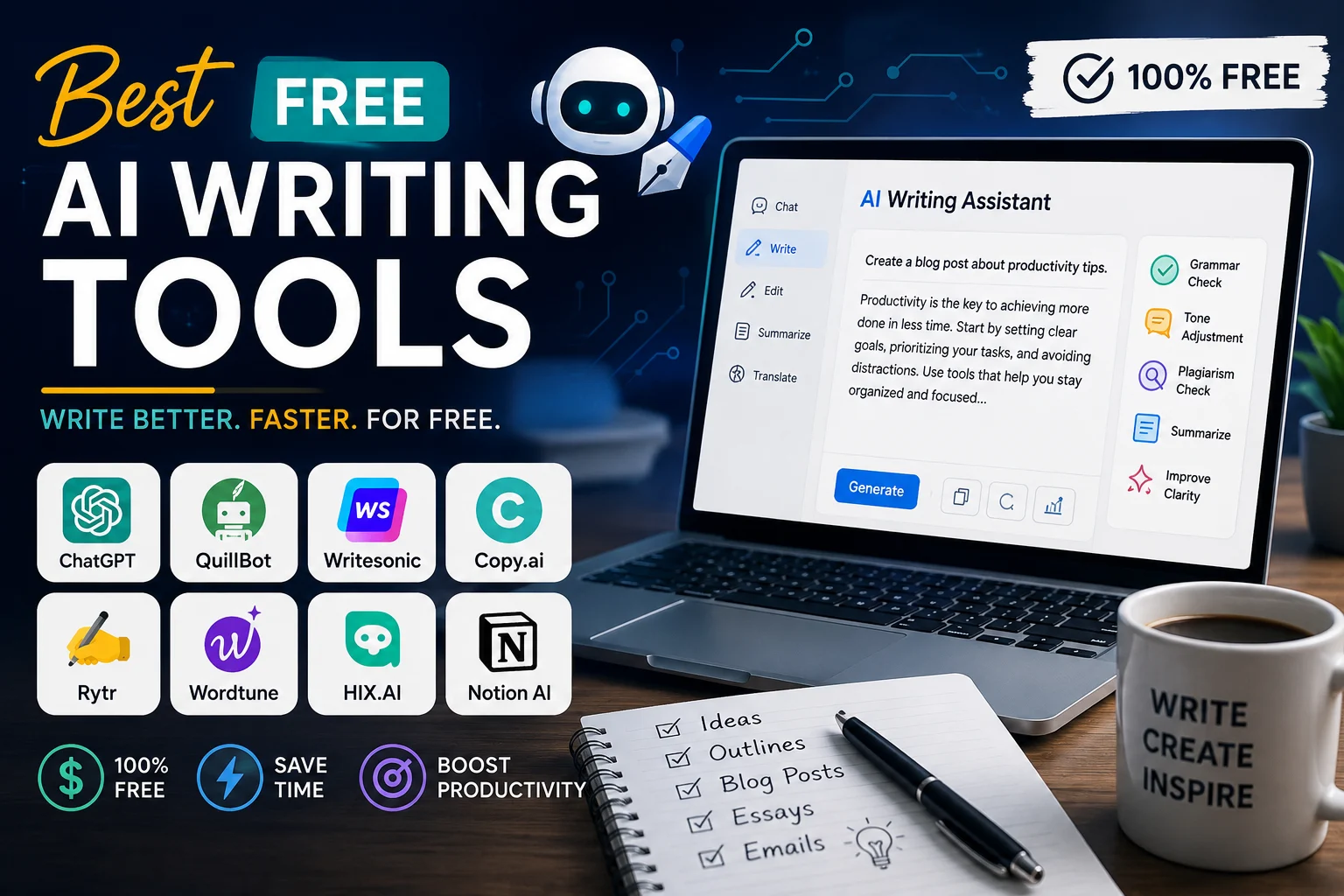
The AI writing market includes general-purpose assistants as well as specialized academic writing tools. Current comparisons commonly highlight ChatGPT, Claude, Gemini, Grammarly, QuillBot, Paperpal, and research-focused platforms for different parts of the essay-writing process.
- ChatGPT — Best for brainstorming, outlining, explanations, and general essay assistance
- Claude — Best for long-form writing, arguments, and detailed editing
- Google Gemini — Best for research-heavy writing and working with large amounts of information
- Grammarly — Best for grammar, clarity, and polishing drafts
- QuillBot — Best for paraphrasing and improving existing writing
- Paperpal — Best for academic writing and scholarly language
- Perplexity — Best for finding research information and source-backed answers
- Notion AI — Best for organizing notes, ideas, and essay projects
1. ChatGPT
ChatGPT is one of the most versatile AI assistants for essay writing. It can help at almost every stage of the writing process, from understanding an assignment to reviewing a completed draft.
Current 2026 comparisons frequently recommend ChatGPT for brainstorming, outlining, structure, and general essay assistance.
What can ChatGPT help with?
- Understanding essay questions
- Brainstorming topics
- Developing thesis ideas
- Creating essay outlines
- Explaining difficult concepts
- Improving paragraphs
- Checking grammar and clarity
- Providing feedback on arguments
- Suggesting ways to organize ideas
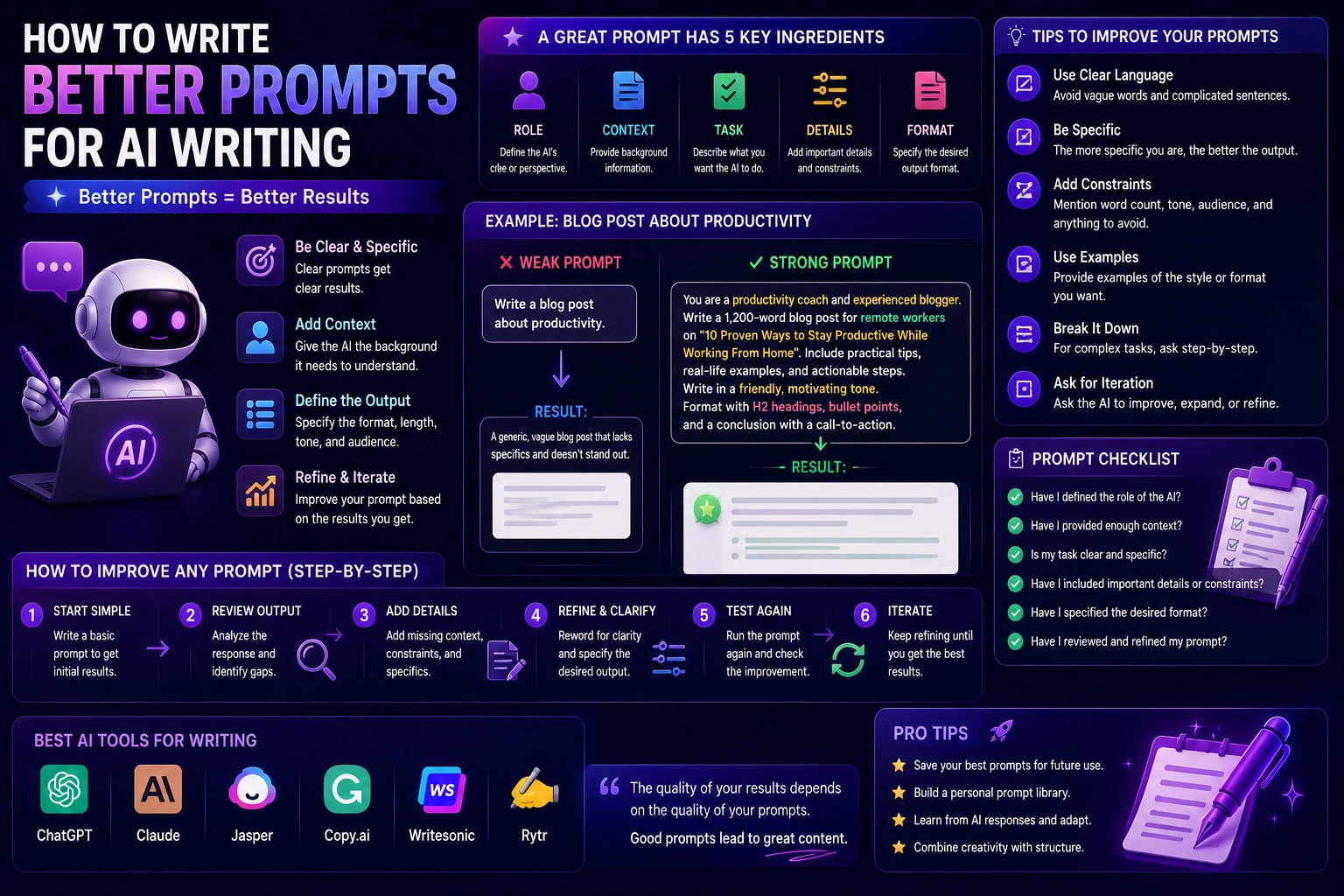
One of the best ways to use ChatGPT for academic writing is to treat it as a writing assistant rather than simply asking it to produce a complete assignment.
For example, instead of asking:
Write my 2,000-word essay about climate change.
You can ask:
Help me understand this essay question, identify the main arguments I could explore, and create a logical outline that I can develop using my own research.
This approach gives you more control over the final work and helps you understand the subject.
Best for: Brainstorming, outlining, explanations, feedback, and general essay assistance.
2. Claude
Claude is another powerful AI assistant for long-form writing and editing. Current comparisons frequently highlight Claude for natural prose, argument development, and handling long documents.
It can be particularly useful when you already have notes, research material, or a draft and want detailed feedback.
Why use Claude for essays?
- Strong long-form writing capabilities
- Useful for developing arguments
- Good at editing large passages
- Can help identify weak reasoning
- Useful for improving structure and flow
- Can work with lengthy source material
For example, you can provide your essay outline and ask Claude to identify gaps in your argument, unclear sections, unsupported claims, or areas that need stronger evidence.
Best for: Long essays, argument development, editing, and detailed feedback.
3. Google Gemini
Google Gemini can be useful for students working on research-heavy essays, particularly when they need to analyze a large amount of information or work within Google's ecosystem.
Recent comparisons highlight Gemini for research-heavy essays and source synthesis.
What can Gemini do?
- Explain academic topics
- Brainstorm research questions
- Analyze information
- Help organize research
- Summarize provided documents
- Improve essay structure
- Help refine arguments
Gemini can be especially useful when your essay requires you to synthesize information from multiple sources.
Best for: Research-heavy essays, information synthesis, and students using Google's productivity ecosystem.
4. Grammarly
Grammarly is different from general-purpose AI assistants. Rather than being primarily an essay generator, it focuses heavily on improving the writing you have already produced.
It can help identify grammar problems, unclear sentences, awkward phrasing, and other writing issues.
Why use Grammarly for essays?
- Grammar checking
- Spelling corrections
- Clarity improvements
- Sentence-level suggestions
- Tone and style feedback
- Writing refinement
This makes Grammarly particularly useful during the final editing stage of an essay. Current comparisons consistently identify Grammarly as a strong option for polishing and improving existing drafts.
Best for: Grammar, clarity, proofreading, and final editing.
5. QuillBot
QuillBot is widely used for paraphrasing, rewriting, summarizing, and improving existing text.
Instead of asking an AI to write an entire essay, you can use QuillBot to improve a paragraph that you have already written.
What can QuillBot help with?
- Paraphrasing
- Rewriting sentences
- Improving clarity
- Summarizing text
- Reducing repetitive wording
- Improving sentence flow
- Helping with citations and references where supported
Current comparisons commonly recommend QuillBot for paraphrasing and improving existing essay drafts.
Use paraphrasing tools to clarify your own writing rather than attempting to disguise copied or improperly sourced material.
Best for: Paraphrasing, rewriting, and improving existing drafts.
6. Paperpal
Paperpal is designed specifically around academic and scholarly writing. It can be useful for students and researchers who need help with academic language, editing, and research-oriented writing.
Paperpal's own 2026 comparison highlights features aimed at academic writing, including citation support, language improvement, plagiarism-related checks, and research workflows.
Why use Paperpal?
- Academic language improvement
- Grammar and style checking
- Academic writing assistance
- Citation-related features
- Research-oriented workflows
- Support for scholarly writing
It can be particularly useful when the essay needs to follow a more formal academic style.
Best for: Academic writing, research papers, and scholarly language.
7. Perplexity
Research is one of the most important parts of writing a strong essay. Perplexity is designed around answering questions using web sources and can be useful during the research stage.
Recent comparisons identify Perplexity as a strong option for research-backed essays because of its source-oriented workflow.
How can Perplexity help?
- Finding information about a topic
- Discovering potential sources
- Exploring different viewpoints
- Researching unfamiliar subjects
- Finding supporting information
However, you should always open and verify important sources yourself. AI-generated answers can contain errors, and citations should never be accepted without checking the original source.
Best for: Initial research, source discovery, and exploring topics.
8. Notion AI
Notion AI can be useful when your essay workflow involves extensive notes, research organization, and planning.
Instead of using it only as a writing generator, you can use an organized workspace to keep your research questions, sources, notes, outlines, and drafts together.
Useful Notion AI workflows
- Organizing research notes
- Summarizing notes
- Brainstorming ideas
- Creating outlines
- Turning notes into structured content
- Managing essay projects
Best for: Research organization, note-taking, planning, and essay workflows.
AI Essay Tools Compared
| AI Tool | Best For | Main Strength |
|---|---|---|
| ChatGPT | Brainstorming and outlining | Versatile essay assistance |
| Claude | Long-form essays | Arguments and writing quality |
| Google Gemini | Research-heavy essays | Information synthesis |
| Grammarly | Editing | Grammar and clarity |
| QuillBot | Paraphrasing | Rewriting and refinement |
| Paperpal | Academic writing | Scholarly language and editing |
| Perplexity | Research | Source-oriented answers |
| Notion AI | Organization | Notes and essay planning |
Which AI Tool Is Best for Writing Essays?
There is no single AI tool that is perfect for every essay. The best choice depends on what part of the writing process you need help with.
Best overall: ChatGPT
ChatGPT is a strong all-purpose option because it can help with brainstorming, outlining, explanations, revision, and feedback.
Best for long-form writing: Claude
Claude is a strong choice when your priority is developing arguments, working with lengthy material, and improving long-form prose.
Best for research-heavy essays: Gemini
Gemini can be useful when your essay involves a large amount of research and information synthesis.
Best for editing: Grammarly
If you already have a complete essay and want to improve grammar, clarity, and readability, Grammarly is a practical choice.
Best for paraphrasing: QuillBot
QuillBot is particularly useful when you need to improve the wording of sentences or paragraphs you have already written.
Best for academic writing: Paperpal
Paperpal is designed specifically for academic and scholarly writing and can be useful for students and researchers who need more specialized writing assistance.
Best for research: Perplexity
Perplexity can be useful when the first step is discovering information and potential sources before writing the essay.
How to Use AI to Write an Essay
A productive essay workflow can involve several AI tools rather than relying on one platform for everything.
Step 1: Understand the assignment
Start by identifying exactly what the essay question is asking. Look for the required topic, argument, word count, sources, citation style, and deadline.
Step 2: Research the topic
Use reliable academic sources, books, journals, institutional websites, and other appropriate references.
AI research tools can help you discover information, but important claims should be verified against the original sources.
Step 3: Brainstorm ideas
Use an AI assistant to explore possible arguments, counterarguments, examples, and questions.
Step 4: Create an outline
Organize your ideas into an introduction, main arguments, supporting evidence, counterarguments where appropriate, and conclusion.
Step 5: Write the draft
Use your research and outline to write the essay. AI can provide feedback or help you improve sections, but your final submission should reflect your own understanding and comply with your institution's rules.
Step 6: Review the argument
Ask an AI assistant to identify weak reasoning, missing evidence, repetition, unclear claims, or structural problems.
Step 7: Edit the language
Use tools such as Grammarly or QuillBot to identify grammar problems and improve clarity.
Step 8: Check citations
Verify every important citation against the original source. Never assume that an AI-generated reference is automatically real or accurate.
Step 9: Proofread the final essay
Read the complete essay yourself before submitting it. Check the argument, evidence, citations, grammar, formatting, and instructions.
How to Use AI Without Cheating
One of the most important questions students have is whether using AI for an essay is allowed.
The answer depends on the rules of your school, university, instructor, or course.
Some institutions allow AI for brainstorming, research, editing, or feedback. Others restrict or prohibit certain types of AI assistance.
Before using AI on an assessed assignment, check the applicable academic-integrity policy.
A safer general approach is to use AI as a study and writing assistant rather than outsourcing the entire assignment.
- Use AI to brainstorm ideas.
- Ask it to explain difficult concepts.
- Use it to create study questions.
- Ask for feedback on your argument.
- Use it to identify grammar problems.
- Verify research independently.
- Write and revise the final work according to your institution's rules.
Can AI Write a Complete Essay?
Technically, modern AI systems can generate complete essays. However, that does not mean submitting an AI-generated essay is appropriate or permitted.
Academic writing is evaluated not only on grammar but also on understanding, reasoning, evidence, originality, and the ability to develop an argument.
Using AI to generate a complete essay without understanding or verifying the content can also introduce factual errors, weak arguments, and incorrect references.
For this reason, a better workflow is to use AI throughout the process as a tool for thinking, research assistance, organization, and revision while maintaining responsibility for the final work.
Why You Should Verify AI-Generated Citations
One of the biggest risks when using general AI assistants for academic writing is inaccurate or fabricated references.
AI systems can sometimes produce citations that look legitimate but do not actually exist or do not support the claim being made. Recent comparisons specifically warn about citation hallucinations in AI-generated academic content.
Always verify:
- Author names
- Publication titles
- Publication dates
- Journal or publisher information
- DOIs or URLs when applicable
- Whether the source actually supports your claim
For important academic work, use reputable databases and open the original source instead of relying only on an AI-generated reference.
AI Tools for Different Essay Types
Argumentative essays
ChatGPT and Claude can help brainstorm arguments, counterarguments, and logical structures. You should provide and verify the evidence yourself.
Research essays
Gemini, Perplexity, and dedicated academic research tools can help during the research and information-discovery stages.
Literature reviews
Research-oriented tools such as Elicit, Consensus, and Scite can be useful for discovering and analyzing academic literature. Current academic-writing comparisons recommend research-specific tools for source discovery and synthesis.
Personal essays
General AI assistants can help brainstorm themes, improve structure, or provide feedback. However, personal essays should preserve your own experiences, perspective, and voice.
Academic papers
For formal academic writing, specialized tools such as Paperpal can provide additional support for scholarly language and editing.
Tips for Writing Better Essays With AI
- Start with a clear research question.
- Build your own understanding of the topic.
- Use AI for brainstorming rather than blindly copying output.
- Verify important facts.
- Check every citation.
- Use reliable academic sources.
- Ask AI to critique your argument.
- Keep your writing consistent with your own voice.
- Follow your institution's AI policy.
- Proofread the final version yourself.
Final Verdict
AI tools can make essay writing faster and more organized, but the best results come from using different tools for different stages of the process.
ChatGPT is a strong all-purpose choice for brainstorming, explanations, outlining, and feedback. Claude is particularly useful for long-form writing and argument development, while Gemini can be useful for research-heavy workflows.
For editing, Grammarly can improve grammar and clarity, while QuillBot is useful for paraphrasing and refining existing writing. Paperpal is a strong specialized option for academic writing, and Perplexity can help with research and source discovery.
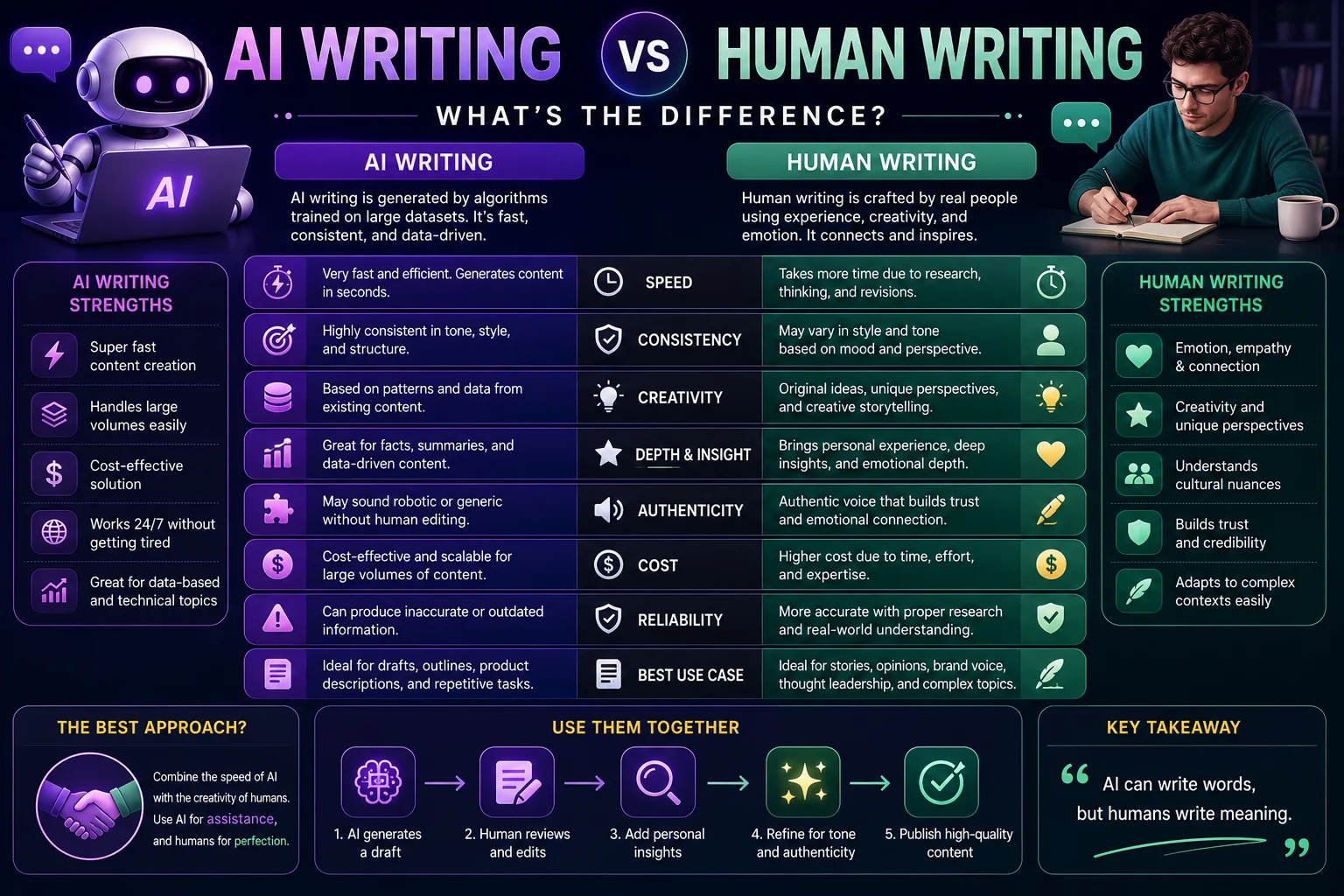
The most effective approach is not to ask one AI tool to do everything. Instead, use AI to research, brainstorm, organize, critique, and edit while remaining responsible for understanding the subject and producing the final work.
AI can save you significant time, but your judgment, research, and critical thinking remain the most important parts of a strong essay.
Frequently Asked Questions
What is the best AI tool for writing essays?
ChatGPT is a strong overall choice for brainstorming, outlining, explanations, and essay feedback. Claude is also a strong option for long-form writing and argument development. The best tool depends on the stage of the writing process.
What is the best free AI for essays?
Free versions of tools such as ChatGPT, Claude, Gemini, Grammarly, and QuillBot can provide useful assistance, although free plans may have usage or feature limitations. Current comparisons identify several of these tools as useful components of a free essay-writing workflow.
Can ChatGPT help me write an essay?
Yes. ChatGPT can help you understand an assignment, brainstorm ideas, create an outline, explain concepts, review arguments, and improve a draft. Whether you can use it for a particular assignment depends on your institution's rules.
Is it okay to use AI for school essays?
It depends on your school's or university's academic-integrity policy. Some instructors allow AI for brainstorming and editing, while others restrict or prohibit its use. Always check the rules for your specific assignment.
Can AI tools create citations?
Some AI tools can help format or find citations, but generated references should always be verified against the original source. AI systems can sometimes produce inaccurate or nonexistent citations.
Which AI tool is best for paraphrasing essays?
QuillBot is a popular option for paraphrasing and rewriting existing text. Grammarly and general AI assistants can also help improve clarity and wording.
Which AI tool is best for academic writing?
Paperpal is designed specifically for academic and scholarly writing, while ChatGPT and Claude are useful general-purpose assistants. Research tools such as Elicit, Consensus, and Scite can complement them during the source-discovery stage.