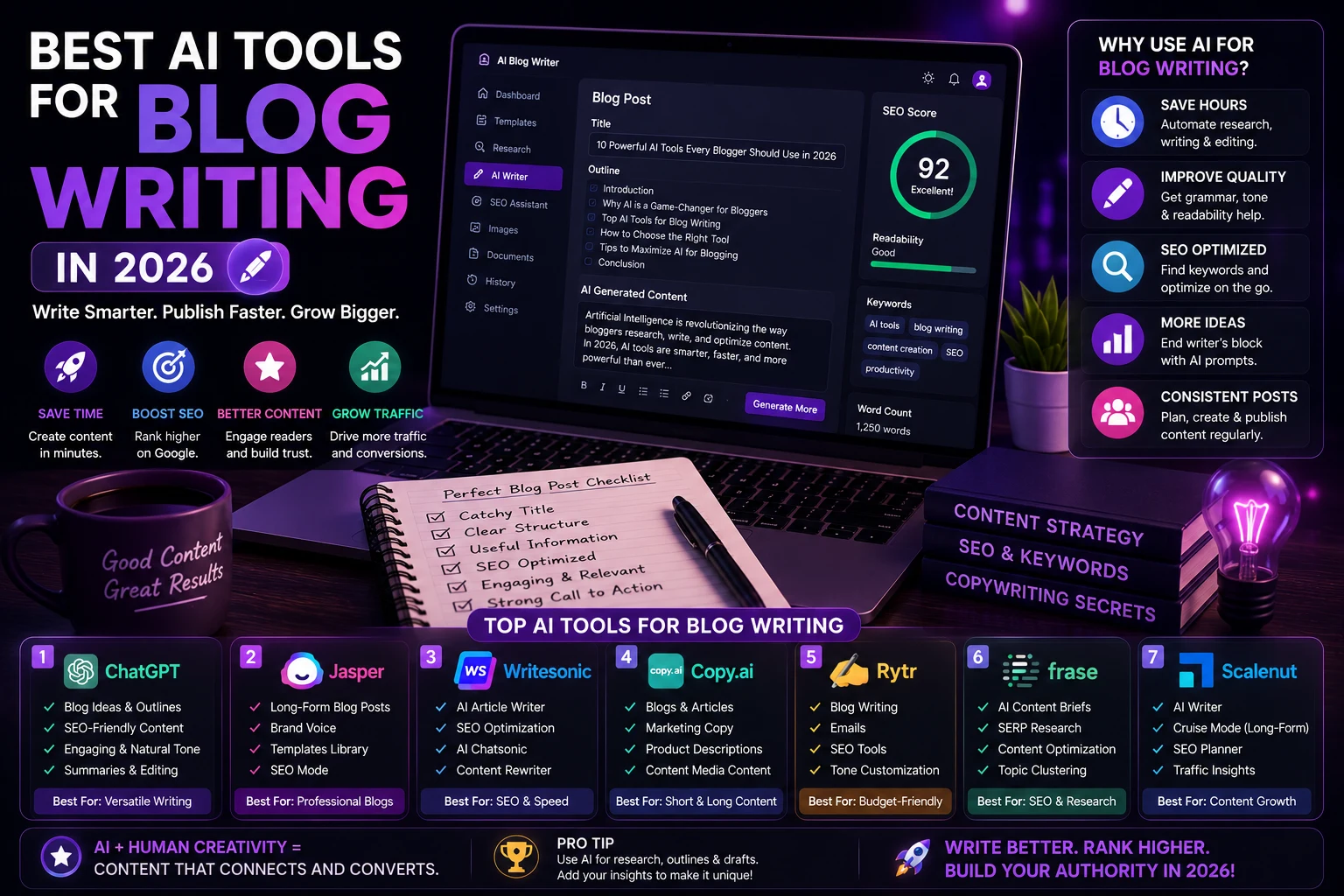

Writing a successful blog post involves much more than putting words on a page. Bloggers need to find topics, research information, create outlines, write drafts, edit content, optimize articles for search engines, and keep their writing useful and engaging.
AI tools can make many of these tasks faster. In 2026, AI writing software has evolved beyond simple text generation. Modern tools can help with research, long-form writing, SEO optimization, editing, content planning, and even publishing workflows. Recent comparisons of AI blog-writing software show that the strongest tools increasingly differentiate themselves through research, SEO, brand voice, and workflow features rather than basic text generation alone.
In this guide, we'll look at the best AI tools for blog writing in 2026, what each tool is best at, and how to choose the right one for your blogging workflow.
What Are AI Blog Writing Tools?
AI blog writing tools are software applications that use artificial intelligence to help bloggers create, edit, research, and optimize written content.
Depending on the tool, you can use AI to:
- Generate blog post ideas
- Create article outlines
- Write first drafts
- Research topics
- Rewrite existing content
- Improve grammar and readability
- Generate headlines
- Create meta descriptions
- Optimize articles for SEO
- Maintain a consistent writing style
The best tools don't necessarily write the entire article for you. Instead, they help you work faster while allowing you to maintain control over the final content.
Best AI Tools for Blog Writing in 2026
1. ChatGPT
Best for: Overall blog writing and content assistance
ChatGPT is one of the most versatile AI assistants for bloggers. It can help with almost every stage of the writing process, from brainstorming and outlining to drafting, editing, and repurposing content.
For most individual bloggers, a general-purpose AI assistant can cover a large portion of everyday writing needs without requiring a specialized blogging platform. Recent 2026 comparisons similarly place ChatGPT among the strongest general AI writing assistants.
Best features:
- Blog post brainstorming
- Article outlines
- Long-form drafting
- Rewriting and editing
- SEO content assistance
- Content repurposing
- Headline generation
- Custom writing instructions
Best for: Bloggers who want one flexible AI assistant for multiple writing tasks.
2. Claude
Best for: Long-form writing and natural-sounding content
Claude is another powerful general-purpose AI assistant that can be particularly useful for long-form writing, editing, and improving the flow of articles.
Its ability to work with large amounts of text makes it useful when you're reviewing an existing article or developing a long piece of content.
Several 2026 comparisons continue to identify Claude as a strong choice for long-form writing quality and nuanced editing.
Best features:
- Long-form writing
- Content editing
- Rewriting
- Article analysis
- Style improvement
- Brainstorming
Best for: Bloggers who prioritize natural writing and detailed editing.
3. Jasper
Best for: Marketing teams and brand-focused blogs
Jasper is designed specifically around marketing and business content. It provides workflows and features aimed at maintaining brand voice and producing content at scale.
Recent 2026 comparisons identify Jasper as particularly useful for enterprise and marketing teams that need brand consistency, templates, and structured content workflows.
Best features:
- Brand voice
- Marketing content
- Blog writing
- Content templates
- Team workflows
- SEO-focused content creation
Best for: Businesses, agencies, and content teams.
4. Surfer SEO
Best for: SEO optimization
Surfer SEO focuses heavily on optimizing content for search engines. Instead of simply generating text, it helps writers understand how their content compares with pages already ranking for a target query.
It is particularly useful when SEO is a major part of your blogging strategy. Recent comparisons continue to position Surfer as a specialist tool for on-page optimization and SERP-based content scoring.
Best features:
- Content scoring
- SEO recommendations
- SERP analysis
- Keyword guidance
- Content optimization
- Content planning
Best for: Bloggers who want to improve organic search performance.
5. Writesonic
Best for: AI content creation and SEO workflows
Writesonic combines AI writing capabilities with features designed for content marketing and search visibility.
It can be useful for bloggers who want to generate articles while also working with SEO-oriented workflows. Recent 2026 comparisons include Writesonic among notable tools for SEO-focused blog creation and budget-conscious users.
Best features:
- AI article generation
- Content rewriting
- SEO assistance
- Content ideas
- Marketing copy
- AI research features
Best for: Bloggers and marketers looking for an all-in-one AI content platform.
6. Grammarly
Best for: Editing and polishing blog posts
Grammarly is especially useful after you've written your article. It can help identify grammar problems, improve clarity, adjust tone, and make your writing easier to read.
For bloggers, an editing tool can be just as important as an AI writer because even a well-generated draft needs proofreading and refinement.
Best features:
- Grammar checking
- Spelling correction
- Clarity suggestions
- Tone assistance
- Sentence improvement
- Writing refinement
Best for: Bloggers who want cleaner and more professional writing.
7. Frase
Best for: Content research and SEO briefs
Frase is designed around SEO content research and planning. It can help bloggers understand what topics and questions should be addressed in an article.
Recent 2026 comparisons highlight Frase as a useful specialist for research briefs and SEO-oriented content planning.
Best features:
- Content briefs
- SERP research
- Topic research
- SEO optimization
- Content scoring
- Article planning
Best for: SEO bloggers who want more structured research before writing.
8. Copy.ai
Best for: Marketing and short-form content
Copy.ai is useful for marketers who create blog content alongside other types of marketing copy.
It can help with content ideas, outlines, introductions, promotional copy, and repurposing blog posts into other formats.
Current 2026 comparisons increasingly position Copy.ai as a broader marketing and go-to-market platform rather than only a traditional AI blog writer.
Best for: Marketing teams and businesses that need multiple types of content.
9. KoalaWriter
Best for: Simple AI-assisted blogging workflows
KoalaWriter focuses on making AI-assisted article creation relatively straightforward. It can be useful for bloggers who want a dedicated workflow instead of building everything manually with a general AI assistant.
Best features:
- Long-form articles
- Blog-focused workflow
- SEO assistance
- Article outlines
- Content generation
Best for: Solo bloggers who want a dedicated AI blog-writing tool.
10. Notion AI
Best for: Bloggers already using Notion
If you already manage your content calendar, notes, research, and drafts in Notion, Notion AI can be convenient because AI assistance is integrated directly into the workspace.
It can help summarize research, rewrite paragraphs, brainstorm ideas, and improve drafts without moving your content into a separate application.
Best for: Bloggers and content teams who use Notion as their primary workspace.
Quick Comparison of the Best AI Blog Writing Tools
| Tool | Best For | Writing | SEO | Editing | Ease of Use |
|---|---|---|---|---|---|
| ChatGPT | Overall blog writing | Excellent | Very Good | Excellent | Excellent |
| Claude | Long-form writing | Excellent | Good | Excellent | Excellent |
| Jasper | Marketing teams | Excellent | Very Good | Very Good | Very Good |
| Surfer SEO | SEO optimization | Good | Excellent | Very Good | Good |
| Writesonic | Content creation | Very Good | Very Good | Good | Excellent |
| Grammarly | Editing | Good | Limited | Excellent | Excellent |
| Frase | Research & SEO briefs | Very Good | Excellent | Good | Very Good |
| Copy.ai | Marketing content | Very Good | Good | Very Good | Excellent |
| KoalaWriter | Solo bloggers | Very Good | Very Good | Good | Excellent |
| Notion AI | Content workspace | Very Good | Good | Very Good | Excellent |
Which AI Tool Is Best for Blog Writing?
There isn't one AI tool that is perfect for every blogger. The right choice depends on what you need most.
- Best overall: ChatGPT
- Best for long-form writing: Claude
- Best for marketing teams: Jasper
- Best for SEO: Surfer SEO
- Best for content creation: Writesonic
- Best for editing: Grammarly
- Best for SEO research: Frase
- Best for marketing content: Copy.ai
- Best for solo bloggers: KoalaWriter
- Best for Notion users: Notion AI
How to Choose the Best AI Tool for Your Blog
Consider Your Writing Workflow
Think about where you spend most of your time.
If you struggle with ideas, choose a flexible brainstorming assistant. If writing takes too long, consider a long-form AI writer. If SEO is your biggest challenge, prioritize an SEO-focused platform.
Consider SEO Features
If organic traffic is important to your blog, look for tools that provide keyword research, SERP analysis, content scoring, topic coverage, and optimization recommendations.
SEO-focused tools such as Surfer SEO and Frase are designed around these specific tasks.
Consider Your Budget
You don't necessarily need several expensive AI subscriptions.
For many solo bloggers, a general AI assistant combined with a dedicated editing or SEO tool may provide enough functionality. Current 2026 comparisons suggest that general-purpose tools such as ChatGPT and Claude can cover a substantial portion of everyday blogging needs, while specialized platforms become more valuable when you need advanced SEO, brand management, or team workflows.
Consider Content Quality
Don't choose a tool simply because it can generate thousands of words quickly.
Look for tools that help you create accurate, useful, readable, original content. The fastest article generator isn't necessarily the best tool for building a successful blog.
How to Use AI to Write a Blog Post
A practical AI-assisted blogging workflow can look like this:
- Choose a topic: Identify a useful question or problem your audience has.
- Research: Gather reliable information and understand the search intent.
- Create an outline: Organize the article into logical sections.
- Write the draft: Use AI to accelerate the first version.
- Add original information: Include your own examples, experience, data, and opinions.
- Edit: Improve clarity, grammar, tone, and structure.
- Optimize for SEO: Review headings, keywords, internal links, and metadata.
- Fact-check: Verify important claims, statistics, and current information.
- Publish: Review the final page before making it public.
Best AI Workflow for Solo Bloggers
You don't need ten AI subscriptions to run a blog.
A simple workflow could combine:
- ChatGPT or Claude: Ideas, outlines, drafts, and editing
- Frase or Surfer SEO: SEO research and optimization
- Grammarly: Final proofreading and clarity
- Canva AI: Blog graphics and supporting visuals
This type of specialized workflow can be more practical than expecting one application to do everything.
How to Write Better Blog Posts With AI
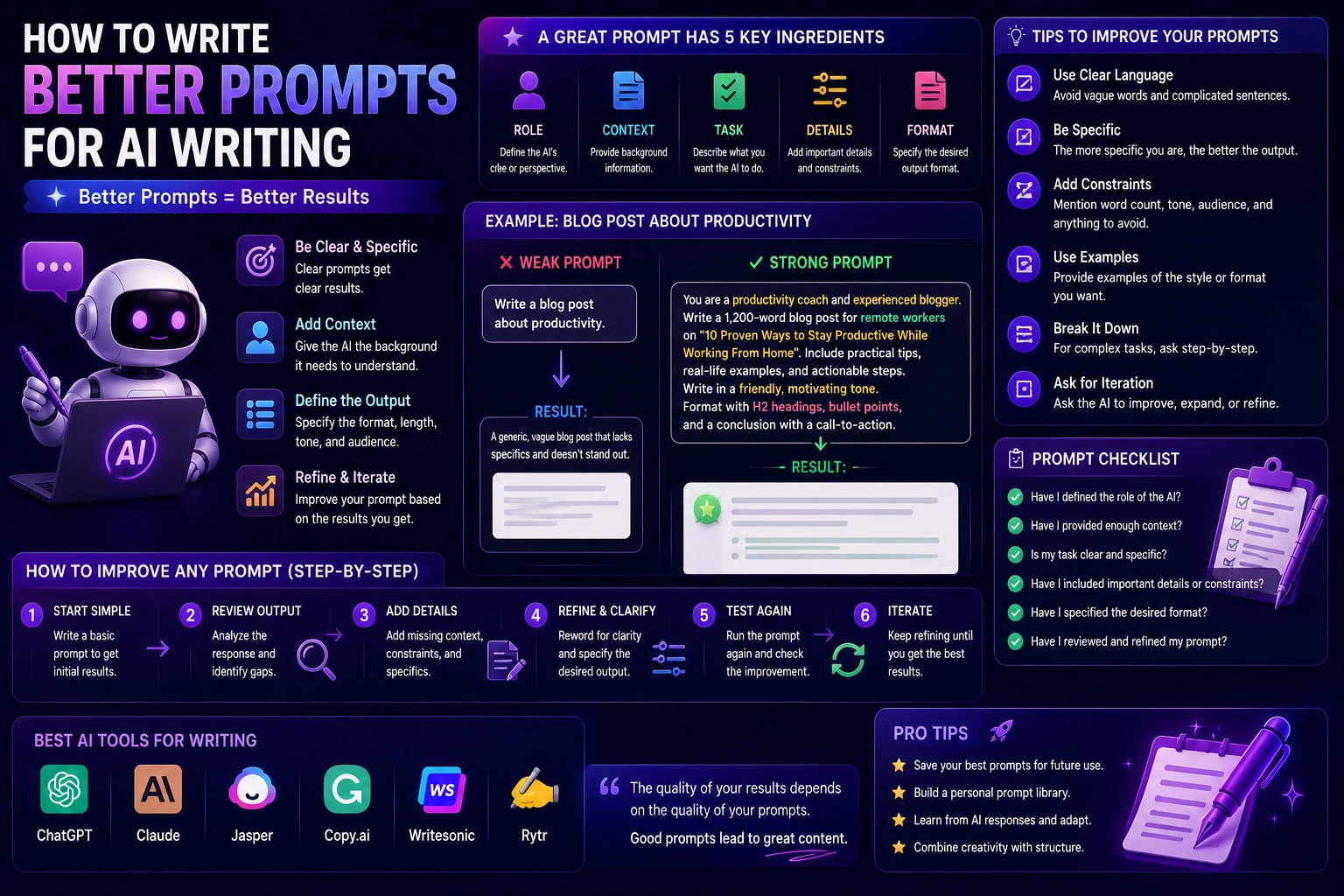
Give AI Detailed Instructions
Instead of saying:
"Write a blog post about AI."
Give the AI more information:
"Write a beginner-friendly 1,500-word blog post explaining how AI tools can help small businesses. Use clear H2 and H3 headings, short paragraphs, practical examples, and a professional but conversational tone. Focus on useful information rather than generic claims."
Use AI for Research, Not Just Writing
AI can help you identify questions readers may have, related topics, content gaps, and potential sections to include.
However, always verify important facts with reliable sources before publishing.
Add Your Own Experience
One of the easiest ways to make AI-assisted content more valuable is to add information that AI cannot simply invent for you.
Include:
- Your own testing
- Personal experiences
- Original screenshots
- Real examples
- Case studies
- Specific recommendations
- Lessons you've learned
Common Mistakes When Using AI for Blog Writing
Publishing AI Content Without Editing
AI-generated content can contain errors, repetition, generic statements, and outdated information. Always review the final article.
Writing for Search Engines Instead of People
Adding keywords repeatedly does not automatically make an article useful. Focus on answering the reader's question clearly and completely.
Using AI to Create Generic Content
If hundreds of websites are publishing similar AI-generated articles, simply producing another generic article may not give readers a reason to choose yours.
Add original insights, examples, research, and practical advice.
Using Too Many AI Tools
More tools don't necessarily mean a better workflow. Choose a small set of tools that solve your actual problems.
Can AI-Generated Blog Posts Rank on Google?
AI can be part of a content creation workflow, but generating an article with AI does not guarantee search rankings.
Successful blog content should satisfy the reader's intent, demonstrate useful information, be accurate, and offer meaningful value.
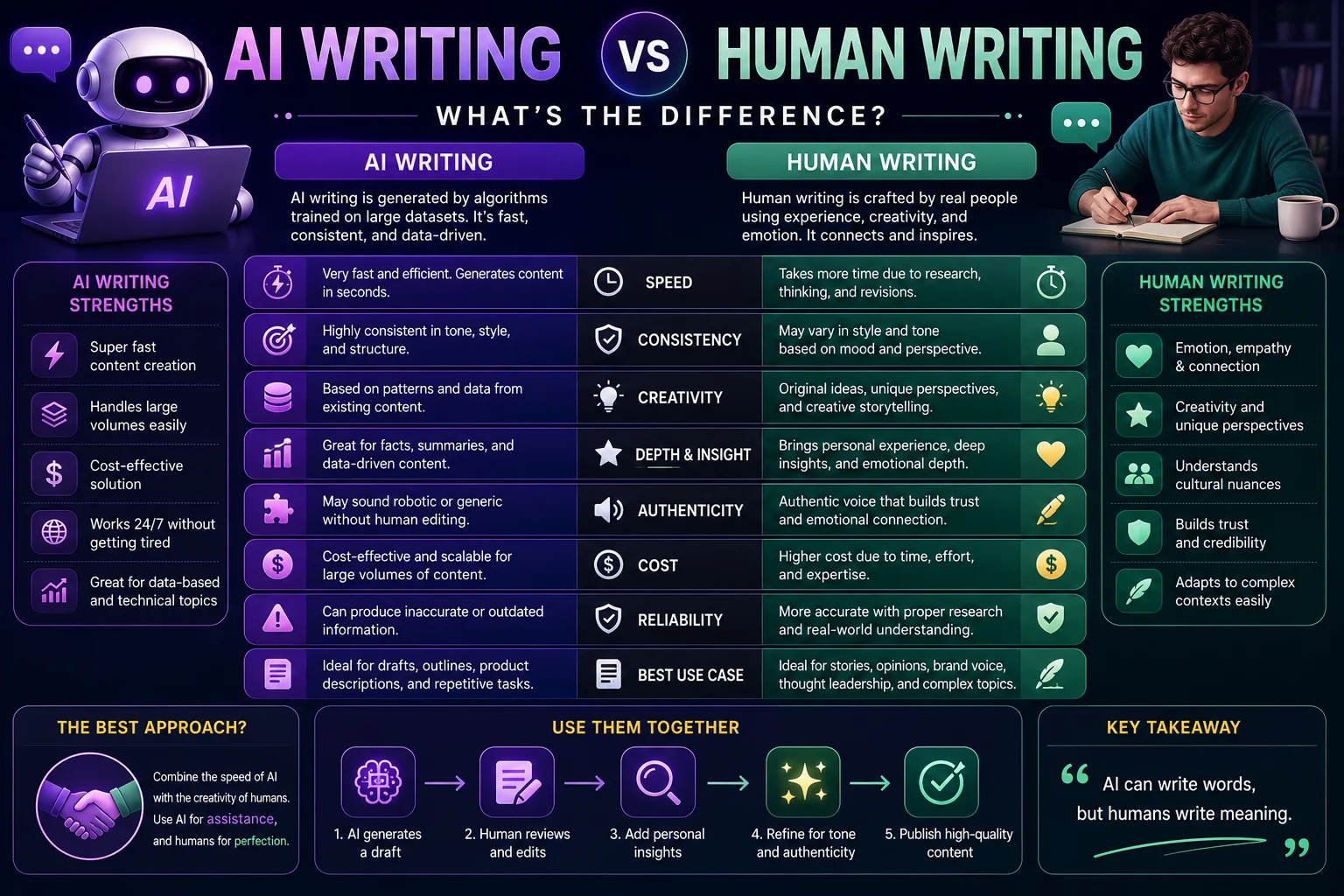
AI is best used to accelerate the process rather than as a shortcut to mass-produce low-value articles.
Are AI Writing Tools Worth It for Bloggers?
For many bloggers, AI writing tools can be worth using if they solve a specific problem.
They can save time on brainstorming, drafting, editing, research, and SEO tasks. However, paying for several overlapping tools can quickly become expensive.
A good starting strategy is to choose one general AI assistant and add a specialist tool only when you identify a specific limitation.
Final Thoughts
The best AI tools for blog writing in 2026 are not necessarily the ones that generate the most words. The most useful tools are the ones that help you create better content throughout the entire workflow.
ChatGPT is an excellent all-around choice, while Claude is particularly useful for long-form writing and editing. Jasper is better suited to marketing teams, while Surfer SEO and Frase are strong options for SEO-focused workflows.
For editing, Grammarly remains useful, while tools such as Writesonic, Copy.ai, KoalaWriter, and Notion AI can fit different blogging workflows.
The best strategy is to use AI as a productivity partner while keeping human judgment, originality, fact-checking, and editorial control at the center of your blog.
Frequently Asked Questions
What is the best AI tool for writing blog posts?
ChatGPT is a strong overall choice because it can help with brainstorming, outlines, drafting, editing, and content repurposing. Specialized tools may be better for specific SEO or team workflows.
What is the best AI tool for SEO blog writing?
Surfer SEO and Frase are strong choices for SEO-focused workflows because they provide features centered around search results, content optimization, research, and content briefs.
Can AI write a complete blog post?
Yes. Many AI tools can generate complete blog post drafts. However, you should review, fact-check, edit, and add original insights before publishing.
Is AI writing good for bloggers?
Yes. AI can significantly speed up research, brainstorming, drafting, and editing. The quality of the final article depends heavily on your instructions and human review.
Should bloggers use multiple AI tools?
Only when necessary. A general AI assistant may handle most writing tasks, while specialist tools can be added for SEO, proofreading, research, or design.
Can AI help improve existing blog posts?
Yes. AI can analyze existing content, improve clarity, rewrite sections, suggest missing topics, create new headings, and help update older articles.